preface
Innovation plays an indispensable role in product design and driving business. As a designer, how to seize the moment of inspiration and constantly copy ideas to produce an endless stream of creative water? "Design strategies | continuous innovative ideas" is divided into progressive and radical chapters, which aims to provide creative strategies from the three stages of creative initiation, process and decision-making, and help you create your own inspiration perpetual motion machine in your work through specific cases or thinking processes.
Expand reading:
Understand the type of innovation: progressive & radical
Before innovation, we need to first define the degree of innovation of the design proposition, and then choose the appropriate method to spread. Innovation can be divided into incremental innovation and radical innovation according to the degree.
Incremental innovation is a relatively common micro innovation, which is the progressive design and continuous improvement of existing concepts, products or services, and usually does not rely on new technologies. The periodic iteration of some software or services, making the new version better than the old version in the minimally invasive new, and meeting the needs of more users are typical incremental innovation.
Radical innovation is relatively rare. It relies on revolutionary technology and innovative business models to solve problems at the same time. Artificial intelligence (AI) and blockchain technology are well-known radical innovative designs that are constantly exploring the market and landing products.

Take the familiar mobile phone products as an example. The iPhone was born in 2007. It is the first capacitive screen mobile phone that supports finger touch operation. It has overturned the previous era when mobile phones must use keyboard or stylus, and laid a foundation for more than ten years of smart phone operation experience. It is a classic radical innovation. In recent years, the mobile phone's screen exploration in less blocking screen content, such as removing the home key and using bangs, water drops, full screen and other operations, is a progressive innovation in experience and appearance.

Understanding the innovation type of design content can help us organically consider users, technology and market, and then choose appropriate creative strategies, and comprehensively consider the perspective and depth worthy of divergence. If, under time constraints and technology cost control, designers receive the need to make incremental innovation propositions, but do not judge the type of innovation, let innovation points rely on imperfect technology or focus on scenarios that cannot be achieved in the short term. Then innovation is not only ineffective for current problems, but also may cost team time and energy.
This chapter describes: incremental innovation
"Design strategies | continuous innovative ideas" is divided into progressive and radical chapters, which describe the methods that can be used in their respective scenarios. This chapter will give priority to the design strategies for progressive innovation, and share strategies and cases through three parts: innovation startup, innovation process, and innovation decision-making, telling how to create user favorite experiences and details in products.

In the business warrior's Dojo, Darling said, "most innovations involve doing better what we do every day, rather than creating something new and different." Radical innovation often depends on technological innovation, so incremental innovation is more common and closer to our life than radical innovation. Micro innovation is not a side issue. In Internet product design, many daily iterative innovations are incremental innovations. The experience that an effective micro innovation can improve cannot be underestimated. The products that make users excited are actually the superposition of each micro innovation.
Incremental innovation initiation / strategy 2

Starting is a step to understand the innovation proposition and demand background.
Incremental innovation is usually to solve a specific problem, with relatively clear propositions and needs. The ideal progressive proposition is clear, definite and divergent. However, in reality, we often encounter resistance in communication and communication: intertwined, too specific, general semantics, abstract and vague, etc. the following two methods are aimed at gradual startup to help you focus on propositions.
Strategy 1 Clear examination and smart principle alignment
Have you ever encountered an integrated demand proposition initiated by multiple parties and conveyed in multiple rounds? The initiation process of such requirements is intertwined, which may be derived from the direction opinions of the high-level, which have been conveyed from top to bottom; It may also be that multiple departments plan and discuss together, and then mix the participants' personal understanding and communication.
Such communication is like passing the word "Ma what Mei?". When this proposition is passed to you, many pits of poor communication and inconsistent understanding may have been buried in the process. At this time, we must make sure that the topic and examination are clear.

Clear examination can be carried out in four steps:
- Communicate and understand needs, and let interested parties participate in synchronization and discussion.
- The designer repeats the understanding and confirms that you are on the same channel.
- Visual communication, using sketches or pictures of relevant cases to avoid the risk of understanding deviation.
- The agreed contents shall be recorded for later comparison.
Smart principle, confirm the specific requirements and objectives:
S (specific) specific ⽽ clear requirements and objectives.
The item M (measurable) is measurable. Provide specific data targets as the basis, such as specific click through rate and conversion rate.
A (attachable) goal can be achieved. Confirm the demand conditions, such as specific demand time, resources, manpower and realization technology.
R (relevant) ⽬ the relevant operation needs of the subject matter are closely related to the subject matter.
T (time bound) all targets are time limited, not time limited.
Example: the goal of this requirement is to improve the conversion rate of users in a certain process to 70%, increase the use of this function by more users, and enhance users' willingness to purchase. The process design involves five steps. This demand will last for one week without working capital. Based on the existing technology of the platform, one product, one interaction, one visual manpower and three development manpower can be invested.
Strategy 2 Propositional focus, concrete description replacing abstract description
Do you encounter the need for gorgeous diction but general semantics, and find it difficult to "guess the proposition"? Reexamine the project proposition you get, remove its rhetorical packaging, and concretize abstract words. If the demand is still vague, continue to deepen and confirm with the demand originator, make bold assumptions, carefully verify, and concretize the problem to be solved.

Propositional focus
Use concrete description to replace the original general and neutral expression, and focus the proposition and concretize the goal. Examples and questions help to better confirm, for example:
"Better user experience" - > "more efficient", "more interesting"
"Products users prefer" -> what do you want users to like? Sensory stimulation? Process experience
"Colorful black" -> can you give me a reference picture:)? If the desired black is the background color, does "colorful" pursue a sense of luster
4 progressive innovation processes / strategies

When we have a clear starting point of focus, we have now reached the stage of unrestrained creativity. In the process, whether personal thinking or team brainstorming, we must follow three principles:
- There are no bad ideas. Many ideas that initially seem difficult to realize or even naive can become wonderful ideas after collision or consideration, so you should record all your ideas.
- Quantity is better than quality. In the process of creative divergence, you may encounter bottlenecks and difficulties. Keep divergent and don't stop at the existing ideas.
- No criticism, no strangulation. Never stifle any possibility in the stage of idea divergence. It is very important for the team or individual to have a sense of security.
The following four strategies provide efficient divergence methods in incremental innovation to help designers find a starting point for divergence.
Strategy 1 Persona canvas, empathy map
The audience of our innovation and design is usually not ourselves, but a specific group of people.
Find core users in the audience, or combine the characteristics of core users into one or more core users. TA is the representative of target users or the person they want to become. Observe TA's life, think about and design the products TA wants to have, compare TA's current products and solutions, study the significance of your innovation to TA, and find bright breakthroughs. Persona canvas and empathy map can effectively analyze user behavior and user psychology in the process of "encircling" users.
Persona canvas, "outflank" users

Persona canvas persona helps establish the personal characteristics of key users and their expectations in the scene. We take tourism travel products as an example to think about core users and connect information and value:
(1) Imagine TA as a real person and improve the basic information. Age, gender, country and region of residence, occupation, marital status, hobbies, leisure time, life experience, way of thinking, etc.
TA's travel preference may be more longing for places different from their traditional living environment;
TA's age and identity are different, and their travel periods and fellow tourists may be different: minors are more likely to travel with their families in winter and summer vacation, and working white-collar workers may ask for leave to travel with their lovers or friends in holidays and off-season.
(2) Analyzing interests, influences, goals, and deeply exploring insights are based on the above basic information.
TA's interest may determine the route innovation of products. If TA likes music, he may want to go to the local livehouse. If he likes history, he may want to go to historic sites.
TA's influence may help strategy planting. Maybe many friends or fans are waiting for TA's journey sharing on social networks.
What is TA's goal? This trip may want to relax and relax with friends, and have a slow-paced experience; Maybe you want to punch in the famous scenic spots, and you want to be fully arranged.
(3) Explore TA's needs and expectations, motivation points, pain points / itch points.
TA may expect a product that integrates travel modes and accommodation. Unified planning, efficiency and convenience can motivate TA, so that TA does not need to pay too much attention to arrangement.
TA may look forward to a product that can let ta go at any time, and bring it to the niche base that can be explored near TA at any time, so that TA and friends can explore freely and romantically, and take many favorite photos to recall and share.
In the above examples, we can see that as long as we list the user's points, we can splice a vivid user image, grasp the pain points and unsatisfied points of oneortwo core users in product innovation, and carry out meaningful incremental innovation for users.
Empathy map, help "Empathy"
Substitute the user's perspective to understand the events that happen, and experience his behavior, thoughts and feelings in the current scene. From the perspective of users, who is Ta, what is TA's goal, what does TA need to see / listen / say / do, what he thinks, what pain points and gains are there. Think and verify the designer's conjecture from the perspective of users.

Source: a gateway to user centered insights
Empathy map helps us to constantly establish assumptions, empathy, and find pain points and values. Take the commuting scene of a female office worker as an example:
- Who: the user is a busy office lady. In the morning commuting time, she takes the crowded subway through 10 stations to work. It takes more than ten minutes to walk before and after the subway, and now it is hot summer.
- Goal: she may want to seize the commuting time, check the morning news on her mobile phone, listen to interested video courses, or watch short videos to relax for a while... She may not want to watch her mobile phone at all, but just want to wipe her sweat and fill her makeup; Maybe grab a seat and set an alarm clock to make up for a while of sleep; Maybe just watch the TV in the subway in a daze
- Look, listen, say and do: will she grab a seat in a crowded carriage, touch others when standing in a shaking carriage, communicate with passengers around, and wear headphones in a noisy carriage
- Pain point & Harvest: is the signal in the carriage good? Will the video she wants to watch become low definition or Caton? When standing in the carriage, can you hold the handrail tightly, carry the handbag, and operate the mobile phone with one hand? Can you reply to the messages sent by your friends in time? Can you hear the sound in the earphone clearly, can you hear the broadcast of the station... She relaxed and rested on the subway; Or absorb information and open a day efficiently?
Depth, coverage, assumption and substitution will help us understand and examine from the perspective of users. For each user's unsolved problems, pain points and potential cool points, they can become opportunities for innovation and make incremental innovation upgrades in products.
From two real cases based on user insight, we can see the new minimally invasive design after surrounding and understanding users:
Example A. in airbnb's recently updated overseas product experience, many innovations are based on the experience insight of users' booking listings.

In the past, even if users had relatively flexible time, they had to search for houses from a specific day to a certain day, which led to the need for users to constantly try date combinations to reduce the possibility of missing houses. The flexible date function is designed around this insight, so that users with relatively free time can choose accommodation according to fuzzy dates (such as July) and travel duration (such as a week), so that users can reasonably arrange travel according to the selected housing sources.
Users often hope to have a special accommodation experience during travel, such as living in houses that can see the northern lights, tree houses with special shapes, houses in the desert... It is difficult to quickly identify these special houses through traditional time and place screening. To this end, airbnb has created a flexible matching function, using machine learning to divide the platform listings into 56 tag categories, such as wonders, camping, skiing, etc., so that users can quickly filter the experience according to their special preferences.
Example B. using the takeout applet to order meals on wechat to support direct bill sharing is also an innovative design based on users' pain points.

Figure: meituan applet
In the past, when several friends wanted to order takeout together, they usually checked the menu on their own mobile phones and then placed orders on the same mobile phone, which was a big pain point. A few people can usually reduce the freight and have relatively strong discounts, but users need to calculate and divide the accounts by themselves. Considering the individual and overall discounts and freight of each commodity, the calculation time cost is high, which is the pain point 2. If friends don't remember to pay in time, users may also need to remind and urge friends to pay, which is also a little itchy emotionally.
So the takeaway software meituan and hungry provide multiple users with the function of ordering meals together and automatically dividing accounts through wechat applet. In the process, only one user needs to share the takeout link to the wechat group, and friends in the whole group can choose the goods they want to buy and place orders together. The account sharing process can also be directly initiated by the system. After one person pays, all employees share the account, and there is no need to pay by themselves. It directly solves the pain and itch of the process of multi-user ordering takeout on the link.
Strategy 2 Modularization, scamper Benz method
Modularization
The content that needs innovation often contains many elements and content. We can try to split and modularize the content to be designed, and then reorganize and innovate. Every step in the process, every group of elements on the interface, and every structure on the product can be used as a split module. After splitting the module, you can use Benz method to divergent ideas, which may create scenes and effects.
Benz scamper
After splitting the module, divergent ideas with Benz method may create special scenes and effects. Benz method is a creative tool based on divergent thinking. The seven letters represent seven creative ideas, substitute, combine, adapt, modify, put to other uses, eliminate, and reorganize.

Example: taking some functions of IOS system as an example, we can push back the module reorganization application of Benz method.
Substitute:
The increasing demand for large screens of smart phones has led to the growth of the overall size of mobile phones year by year. In the development process of iPhone, the up and down non screen display areas are replaced, and the hardware home key area is "replaced" with interface operation. The up sliding gesture and interface home key are used to meet the needs, and the larger screen display is available without enlarging the overall height and weight of the phone.

Combine:
The independent operation of each app in the system cannot fully meet the needs of users. For example, users want to chat with other friends while watching movies, and can directly add relevant content to their notes after taking photos or recording, etc.
The IOS system uses the idea of "combination", and allows multiple apps to be used at the same time or in combination with each other through the system's support for interactive frameworks such as split screens and floating windows. It can empower the originally supported app capabilities and open up more usage scenarios.

Adapt:
OCR photo to text function has been used for a long time, but it is not widely used in the original photography needs. The idea of adaptation takes OCR technology as a capability module to "adapt" to more scenes, so that this technology can find more new scenes and enlarge its value.
When users read physical books, they can take photos of the contents and extract them into their notes; When users see the number they want to dial on the advertisement, they don't have to input it. As long as they take out the camera, they can recognize the number and call; Signs, product information, menus, etc. on a foreign trip can be translated only by taking a picture.

Modify:
Originally, the screen of mobile computers only supported brightness adjustment, but with scientific research and investigation, it was found that the exposure of blue light on the screen before going to bed and in a dark environment may lead to excitement and eye injury, and brightness adjustment cannot fully cover these subdivision needs. By "modifying" the color and mode of the interface, and adding dark mode and eye protection mode, the screen color display can meet the user's preference needs in different periods of time.

Put to other uses:
Applications such as maps in mobile phones have positioning functions. If your mobile phone is lost, you can use other electronic devices to retrieve it. However, if other non electronic items are lost, how should we find them? Apple uses the location function "for other purposes" as an independent airtag accessory, which can easily provide this ability for other products without location, so that these products can be found by mobile phones. Meet users' more needs of finding items / pets / positioning.

Eliminate:
Originally, data lines or third-party software are needed to transmit pictures, music, videos, files and other contents between mobile phones, computers and other devices, which is very inconvenient. In order to optimize and facilitate the process, IOS system uses the idea of "removing" to reduce intermediate media. Airdrop function can quickly transfer files between devices as long as Bluetooth is turned on.
Before leaving the computer and hoping to continue reading the web page just viewed on the mobile phone, you need to copy and paste the link separately to the third-party software for transmission. Now these troubles are also solved by the idea of "removing". You can directly continue to open the web page by opening the browser with the handsoft function.

Reorganization:
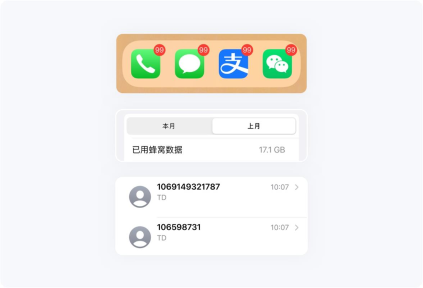
Users may want to have a lot of intuitive information as soon as they open their mobile phones every day. Weather, time, news, hot search list, email, notes, words, stocks, etc.
Originally, these information needs to be viewed separately in each individual app. Now users can quickly get the information they want by glancing at the desktop. This is the reorganization of information and functions on the desktop to meet the display of more information and functions in the form of widgets.

Strategy 3 Reverse thinking: principle / function / Structure Reverse
Reverse thinking has created many unconventional ideas. If there is no clue to follow the forward design idea, reversing the problem or problem-solving idea often brings unexpected surprises. Here are three types of common reverse ideas and specific cases in incremental innovation. When divergent, you can use them as a thinking list to try to open ideas one by one.

Principle reverse | divergence in the opposite direction of the principle of things.
Example A. touch content - > content touch hand
Many mobile phone operations cannot be completed with one hand as the screen becomes larger. How to make users touch the far place on the mobile phone screen has become a problem. Instead of letting users reach the keys and content on the screen with their hands, it is better to let the content reach their hands, and let the mobile interface drop by half a screen as a whole / the page indent as a whole, so that users can quickly trigger one hand operations to meet users' needs in the required scenarios.

Example B. Download Software - > use software on the cloud
Many users reject installing a lot of software on computers and mobile phones. How to make users use software more lightly and reduce the memory burden of the computer. Cloud services let the software go to the cloud, helping users get rid of the installation package and log in on the web page. Wechat applets also use the same idea to reduce the burden for users. For apps that are occasionally used but occupy memory for a long time, users can go directly to the applet page and use it immediately. It not only reduces the cost of software developers, but also makes it very easy for users to share and spread.

Reverse function | envision new ways to solve problems or find new scenes and functions from the opposite side of functions.
Example A. block the outside - > enlarge the outside
The design of headphones usually pays more attention to sound insulation, so that users can still hear the sound in headphones in a noisy environment, but users will also encounter the time when they need to listen to internal and external sounds at the same time. Airpods divides headphones into noise reduction, off and permeability modes. In the permeability mode, headphones can help users amplify external sound like hearing aids, and play device content at the same time. It allows users to communicate while listening without taking off their headphones.

Example B. video conference sharing content - > video conference don't say or listen - > create a focused atmosphere
During the epidemic, many students study alone at home. Without the atmosphere of classroom and self-study classroom, it is difficult to concentrate on learning. Usually, video conference is to gather everyone together to share and listen to the content of the same topic, while QQ self-study room uses the form of video conference to gather students together. When you open the video, you don't communicate or pay attention to each other. You simply use the video to create a learning atmosphere. Students see each other studying seriously, as if they are in a self-study class, which is conducive to self-monitoring.

Reverse structure | conceive new ways to solve problems from the reverse structure of things. Generally, we can start from the structural location, structural materials and structural types.
Example a. the laptop camera only faces the user - > change the camera structure to support flipping
The rear camera is easy to be damaged when exposed. The notebook usually only has the front camera facing the user, but users have many scenes that need the rear camera, such as when participating in the meeting, they want to record the content of the host, and when listening to the class, students may want to record the content with the notebook and shoot the content of the blackboard ppt at the same time. ASUS notebook allows the front camera lens to rotate 240 degrees. In natural state, the lens faces the user, and turns to the rear when the user needs to shoot externally. This design separates the angle of the lens from the angle of the notebook screen to meet the requirements of internal and external shooting and carrying protection.

Example B. documents are included in the online disk as files and other types of content - > documents are included in various types of content as folders
Documents are usually considered as file types, and can only be saved and shared in a folder or online disk together with pictures, videos, etc. Tencent document takes the structure of the document as a folder, and supports users to drag and include other documents, PDFs, pictures, videos and other contents into a document to save and view.

Strategy 4 By analogy, learn from the problem-solving ideas in other fields
Synthesize by analysis
Tom Freston, the co-founder of MTV, once said, "innovation is the combination of two existing things in a new way." analogy is very useful in incremental innovation, and it is easy to produce the effect of 1,1>1. Find a common problem-solving idea in other fields, "forcibly" apply it to the problem to be solved now, and find "the same thing". These ideas can be the inspiration library, material library and product case library collected daily. When encountering the enlightenment that requires innovation and breakthrough, we can learn from our own inspiration library by analogy.

Example A. watch a short video comment like watching a video barrage
In watching long videos, users have been used to and enjoy opening the barrage when watching videos, and watching while commenting with other users, which will have a great atmosphere. Qq small world seizes this experience and adds comments in the form of a barrage to the short video, so that users' comments can be directly presented and played in the short video, which not only increases the viewing atmosphere, but also enhances the interaction of users with common topics of interest.

Example B. switch music and Related videos with the idea of "brushing"
When listening to music, users are often interested in learning more about the visual information of the music, such as watching the MV of the song, live clips of concerts, movies and entertainment using the music... The popularity of short videos in recent years has made users familiar with using "brush" gestures to carry out more content. QQ music uses this idea to carry the switching entrance of music and Related videos. When users enjoy music, the upward "brush" will enter more powerful visual content such as MV, and continue to "brush" to watch more relevant videos. The design not only helps users transition from pure hearing to a strong immersion atmosphere, but also allows videos and film and television works related to songs to get more exposure and attention, which is conducive to the development of music creation ecology.

Example C. record real objects in life like cutting magazines
We should have made clippings when we were young. In life, we also want to cut and place objects in the real world into documents or emotional boards. Clipdrop supports taking pictures of objects on the mobile phone and automatically deducting the background to extract the objects. When the user moves the mobile phone to the computer, the objects in the real world will be quickly "copied and pasted" to the panel.

3 progressive innovation decisions / strategies

"The value of an idea is to use it."—— Thomas Edison. Innovation serves our goals. It is a means, not an end. So when we spread many ideas and look full of potential, the difficult time of choice comes. In the face of limited resources and time, the following three methods can help screen a large number of ideas and promote goal achievement and creativity.
Strategy 1 Structuring and screening ideas, priority matrix considering cost
Structuring and screening ideas
In the face of a large number of creative ideas, you can structure and filter the two diagrams in the following figure to see whether they are enough to match the current opportunities and status, and then improve and supplement the scheme. The structured process is a process of convergent thinking and screening.
Example A. progressive vs radical
The following method can quickly distinguish the degree of matching and innovation. In the creative process, our divergent ideas may go beyond the gradual scope initially set. At this time, we can re-examine whether the divergent ideas belong to gradual innovation or radical innovation. First, we can match the current needs, and we can consider others beyond the scope and then invest more resources for implementation.

Example B. customer classification vs product / service
The method in the figure below adds the object of innovation to the screening process, because innovation is different for the product itself and market customers. This screening method effectively combines this demand.

Priority matrix tool, considering the cost and value of ideas
It can help the team consider the value of each function and the workload required to deliver it, and set priorities for ideas. The four quadrants of the priority matrix are important and urgent, important and not urgent, urgent and not important and not urgent. When we put ideas into this proof and put all ideas into this matrix, we can see that the most important and urgent ideas can be given priority to implementation and planning, and then we can consider those important and unimportant ideas. Even if the implementation return rate of unimportant and unimportant ideas is not very high, we can ignore them. Generally speaking, high return on investment (ROI) and high priority ideas deserve to be considered first.

Strategy 2 Prototyping, agile iteration
The process of creative divergence may be very chaotic, and only gradually becomes clear in the process of deletion and iteration. In the process of promoting creativity, there must be many mistakes. As director Woody Allen once said, "if you don't fail from time to time, it shows that you haven't done anything very innovative." Trial and error with the minimum cost is a good strategy to find problems, solve problems and avoid problems.
Prototyping, agile iteration
Use the form of prototype workshop to quickly try, fail and iterate. Maximize efficiency with minimal cost testing. Many attempts that will be abandoned do not need to wait for the final design result to decide. Iterative deletion can be carried out in the sketch and prototype stages.

Some prototypes can be used to communicate and demonstrate interactively, some sketches or color cards can be used to understand the feeling visually, and the physical product prototype pasted by foam board can also meet the communication. Repeat the process of divergence and convergence in the prototype test stage, and finally let good ideas land. The whole can be divided into three stages:
(1) Functional prototype
Test key variables for the experience of key functions, make a minimum viable product, and then conduct intensive tests on potential users.
(2) Finished prototype
At this stage, the decentralized function prototype is mainly integrated, so that users can experience the overall interaction and feedback.
(3) Final prototype
The prototype at this stage collects the previous feedback and adjustment, and further improves the process, which usually has a high degree of investment and realization.
In the process of MVP prototype testing, it is particularly noteworthy that the complete finished product should not be separated into fragmented modules, and it is necessary to ensure that MVP is the smallest unit that can be run.

Source: a better MVP skateboard diagram – Steve Iverson
Strategy 3 The most advanced but acceptable, let users gradually accept
Most advanced yet acceptable
If you encounter resistance in the process of choosing innovation and change, don't rush to deny the creativity itself. You can try whether there is less friction to promote innovation. The usage habits and existing cognition formed by users are difficult to change quickly in a short time, so the more mature the product is, the milder the improvement is often. So as not to encounter rebound when changing. Even very correct decisions or seemingly simple adjustments sometimes require patience, and users can accept them slowly through gradual changes.
Example The story of interface reform of American shopping website eBay is a good example.
In the early days, their official website used yellow as the background color of the text, which was not friendly enough to read. When they upgraded the brand, they changed the background color of the text to white, but they didn't expect that this decision, which is almost a consensus now, was questioned by thousands of emails, and asked the web page to change back to yellow. Obviously, users are not ready to change, so eBay chose to change the website back to yellow, and lowered the yellow one level every day for a year until it was completely white a year later, without any user complaints. Therefore, when designing and changing, we don't need to achieve it overnight. Respecting the rhythm adjustment of users makes it easier for innovation to be accepted.

epilogue
It is hoped that the design strategy of gradual innovation in this paper can bring some enlightenment to designers. Progressive innovation with continuous improvement will make users feel the enthusiasm and growth of the product, and bring the highest user participation, because the visibility of product iteration is conducive to users' feedback and suggestions, and further promote a more extreme experience of product design.
In the next chapter, we will talk about the design strategy of radical innovation. Radical innovation depends more on the comprehensive background of technology and business model. Compared with progressive innovation, it can bring more breakthroughs. Designers undertake technology, business scenarios and user experience in the innovation process, and are an important link role. We hope that the next chapter will help designers bring greater breakthroughs to products on the basis of progressive innovation.
Reference: some strategies are inspired / extracted from the following works and articles:
- 《Creative Strategies》by Fridolin Beisert (Author), Jessie Kawata (Artist)
- 《The Design Thinking Playbook: Mindful Digital Transformation of Teams, Products, Services, Businesses and Ecosystems》Michael Lewrick(Author),Nadia Langensand(Artist)
- 《Zero to One: Notes on Startups, or How to Build the Future》by Peter Thiel, Blake Masters
- 《Thinking, Fast and Slow》Daniel Kahneman
- 《Cross the Chasm》Geoffrey A. Moore
- 《The Innovator‘s Dilemma》Clayton M. Christensen
- 《Lean Startup》Eric Ries
- What are 5 Whys? | Interaction Design Foundation (IxDF)
- https://cwodtke.medium.com/how-i-stopped-worrying-and-learned-to-love-design-thinking-f1142bab60e8
- Types of Innovation – The Ultimate Guide with Definitions and Examples
- The Design Process Simplifed – Design Sojourn
- https://medium.com/user-experience-design-1/10-design-principles-every-designer-should-know-a03e12f8deca
- https://blog.prototypr.io/shaping-user-behaviour-is-better-than-changing-them-47997f36e71
- Airbnb 2021 Release: 100+ innovations and upgrades across our entire service
- Clipdrop – Copy and Paste reality with AR + ML | Product Hun
Welcome to follow the author's wechat official account: "Tencent isux"